PRESENTATION, by Franco Mannino
PREFACE, by Zhao Feng
AUTHOR’S PREFACE
INTRODUCTION
THE FORMAL STRUCTURE AND THEORETICAL FOUNDATIONS OF HEXAGRAM NOTATION
THE HEXAGRAM NOTATION STAFF SYSTEM AND RULES FOR ITS APPLICATION
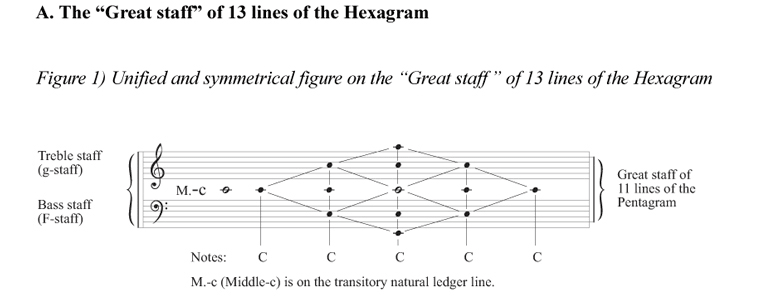
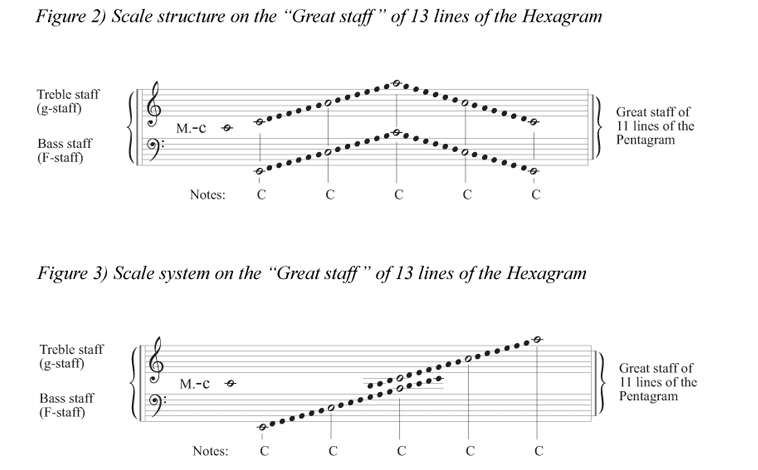
A. The “Great staff” of 13 lines of the Hexagram
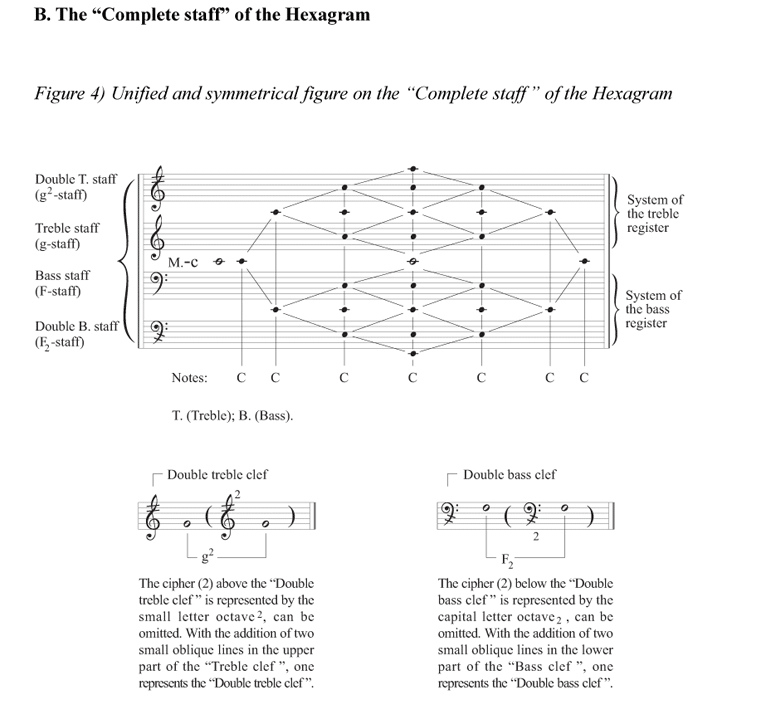
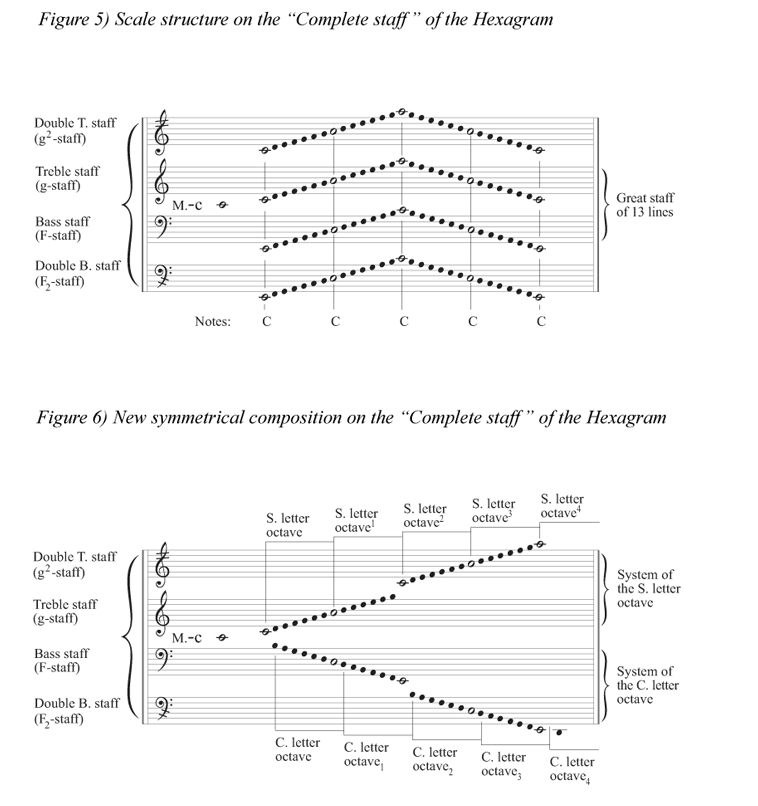
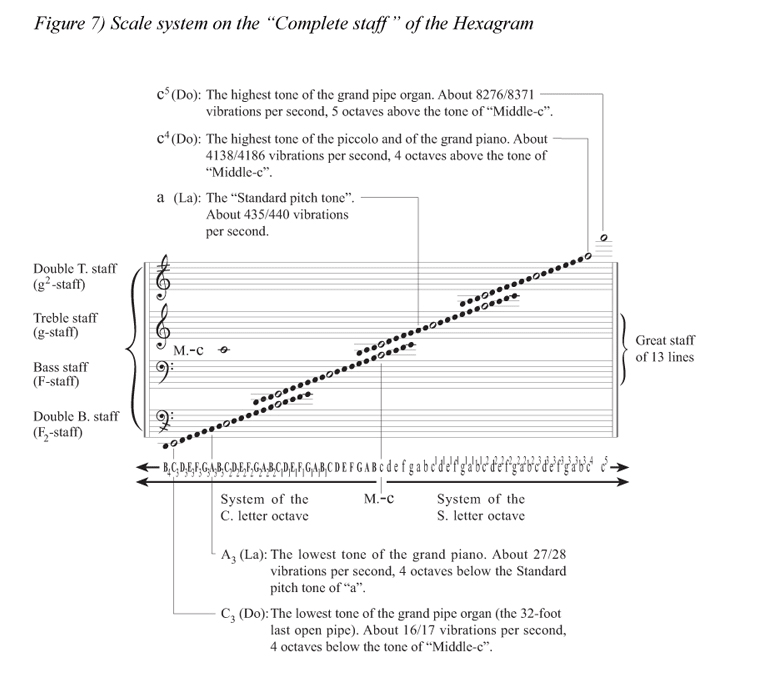
B. The “Complete staff” of the Hexagram
C. The relationship between the “Great staff” and the “Complete staff” of the Hexagram
D. The “Middle staff” (“Alto staff” and “Tenor staff”) of the Hexagram
E. The “Transitional staff” of the Hexagram
F. The “Inferential staff” of the Hexagram
G. The “Demonstrative staff” of the Hexagram
H. The notation of the 24-tone equal-temperament system
I. The new order of Hexagram notation and rules applied in the full score
J. The Tonic Do/La solfeggio (relative solfeggio) notation and the applicative modality of the generalization on the Hexagram
THE FUNCTION AND MEANING OF HEXAGRAM NOTATION
CONCLUSION
APPENDIX (1)
Synopsis of the diagram of musical instruments and human voices, with the notation in the respective keys and with real sounds, referring to the frequencies on the Hexagram
APPENDIX (2)
System of the keys-signature in Hexagram notation
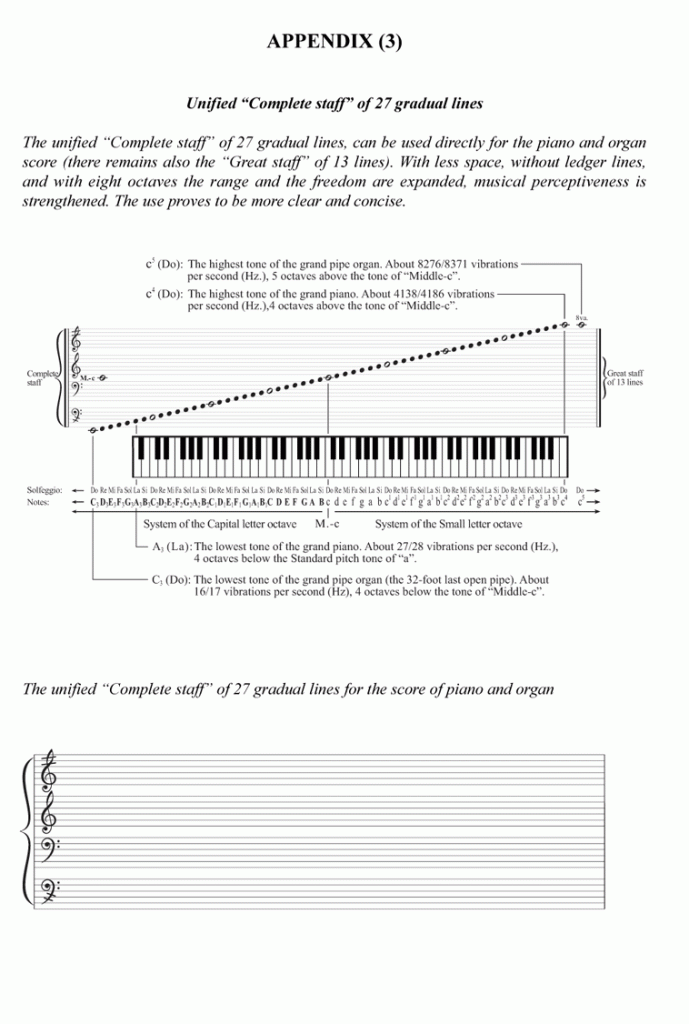
APPENDIX (3)
Unified “Complete staff” of 27 gradual lines
Example 1.
FOR PIANO
(With the unified “Complete staff” of 27 gradual lines of the Hexagram notations)
CONCERTO N°1 IN Bb minor Op.23, by Peter Tschaikovsky
Example 2.
FOR PIANO
(With the “Great staff” of 13 lines of the Hexagram notation)
PAGE FROM ALBUM: “For Elise”, by Ludwig van Beethoven
Example 3.
FOR VOICE WITH PIANO ACCOMPANIMENT
(The part of voice with the Tonic Do/La solfeggio notation on the Hexagram)
‘O Sole Mio (Neapolitan song)
Example 4.
FOR CHORUS
(With the Tonic Do/La solfeggio notation on the Hexagram)
Frère Jacques (Brother John / Bruder Jakob / Fader Jakob…)
RESEARCH MATERIALS AND SOME CONSIDERATIONS
General observations on proposals of music notation reform
How to evaluate the need for Pentagram notation reform
How to evaluate the possibilities of Pentagram notation reform
Reference 1.
THE MUSIC NOTATION REFORM PLAN IN THE “TREATISE ON THE HEXAGRAM” ACADEMIC STRUCTURAL ELEMENTS AND THEORETICAL APPLICATIVE CONNOTATIONS
Reference 2.
PRESENTATION OF THE FIRST ITALIAN EDITION
by Editrice Europea, Rome 1990
Reference 3.
SOME INFORMATION AND SITUATIONS WORTHY OF ATTENTION
RECAPITULATIONS AND CONSIDERATIONS, by Wu Dao Gong
ENTERTAINMENT.
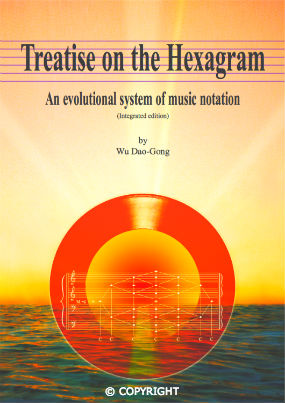
The Integrated edition of the text Treatise on the Hexagram is an enlarged and updated version of the first edition published in 1990, and the outcome of further examination and research over a period of twenty years. It constitutes a completion of the integral functional system, from a strictly professional application to a broadly popular one. It is a practicable system independently of any tendency or particular school, and it can either fulfill the evolutional demands of contemporary and avant-garde music, or satisfy the need for the divulgation, promotion, and development of classical and popular music. It is an elaboration whose goal is universal contact and the shared advancement of musical culture in humanity’s third millennium.
The Treatise on the Hexagram proposes a reform of music notation based upon the theory and achievements of the Pentagram notation, of which it represents an evolution, not an ex novo creation. Musicians are not required to begin their studies again from zero; once one has understood the logical formula and unitary rule of the Hexagram system, one has the keystone of the whole notational system.
The Treatise on the Hexagram also represents the integration and reciprocal complement between Western and Eastern cultures, in harmony with today’s tendencies. In this encounter, the two cultures can find new inspiration and reciprocal stimulation in the search for a common civilization and collective progress.
The author hopes to elicit from all friends of the international musical community, to whom this treatise is addressed, the critical discussion, practical application, and creative contributions regarding the music notation of the Hexagram system.
THE MUSIC NOTATION REFORM PLAN
IN THE “TREATISE ON THE HEXAGRAM”
ACADEMIC STRUCTURAL ELEMENTS
AND THEORETICAL APPLICATIVE CONNOTATIONS
Hexagram notation is the outcome of the rational evolution and comprehensive development of Pentagram notation. It is a system with applications of multiple functionality and adaptable versatility, composed of twenty illustrations of notation and two theoretical frameworks of special application, together with instructions for the generalization of the “Tonic Do/La solfeggio notation”. Being a system made up of the unity of opposites, its application has just one single rule and one logical formula, which can be unfolded from the microcosm to the macrocosm, from the interior towards the exterior, always beginning again in an endless cycle, capable of infinite variations without detaching from its principle, while being also an exact and efficient expressive system for a modernization of musical ideography that integrates form, mathematics, and philosophy.
Hexagram notation has fully inherited the theoretical and artistic achievements of Pentagram notation, of which it thoroughly respects the traditional knowledge and preserves the applicatory uses. Its practical aspects are: to derive the logic of the music theoretical development; to unify and simplify the system of writing and reading of the notes; to expande and complete the range of notation; to reduce or eliminate the use of ledger lines; to determine the “Middle-c clef” (the “Alto clef” and “Tenor clef”); to correct the notation of inversion and of modification; to resolve and allow the overcoming of the contradictions and erroneous impressions concerning the relation between vertical and horizontal elements of the score, as also between reading and listening, to achieve a reciprocal unification based upon formal and mathematical logic; to simplify the page of the score, moreover the notation proves to be greatly rationalized and standardized, more practical to use, and of greater efficacy and precision. Hexagram notation, given the direct and efficient means and method, lends itself also to an use of generalization and computerization. The creation of the notation of registers beyond practicable use, and the particular categories of imaginative frequency, open a vast prospect for scientific use and a modernization of musical technique. Hexagram notation possesses the function and meaning of the heredity of the past together with the inspiration of the future and also of the avant-garde.
*Author Wu Dao-Gong: Professor of violin and traditional Chinese violin, as well as composer, he graduated from the Anhui Academy of Arts and subsequently performed there as a concert artist. Since 1983 he has lived in Rome, where he has pursued advanced and specialized studies with the eminent violinist Maestro Arrigo Pelliccia of the National Academy of «Santa Cecilia», and conducted extensive research on the ideographic aspect of music notation. The achievement of the innovative model is the result of a felicitous encounter between elements of tradition and rationality typical of Western musical culture, and several themes that originate in Chinese culture and act as a catalyst, while respecting the basic framework of universally widespread music notation.
THE HEXAGRAM NOTATION STAFF SYSTEM AND RULES FOR ITS APPLICATION
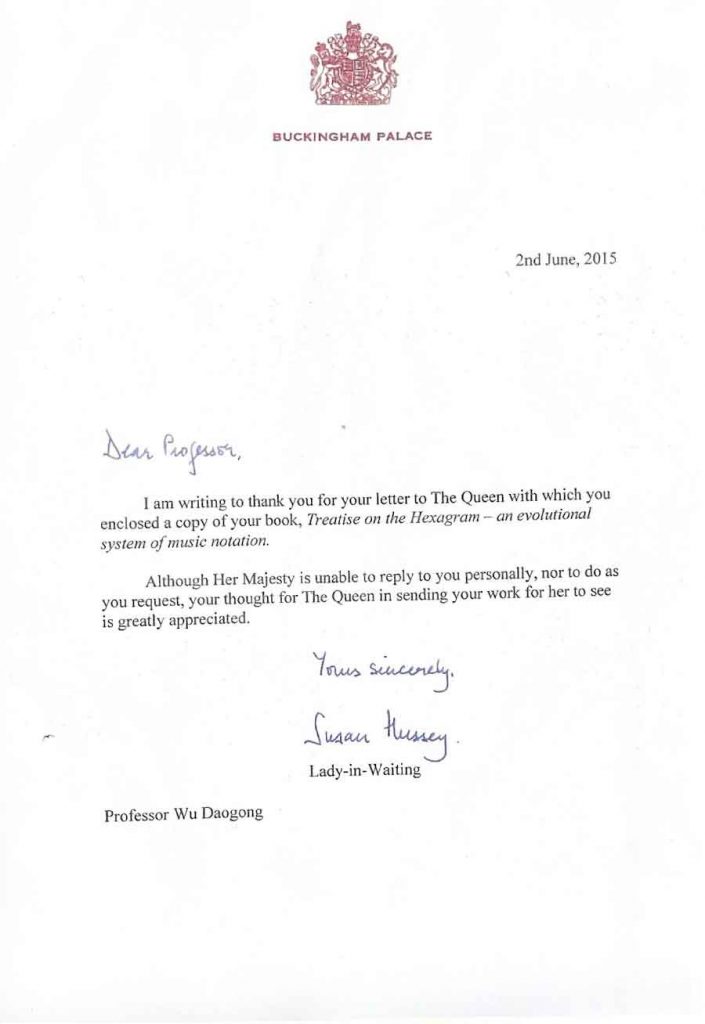
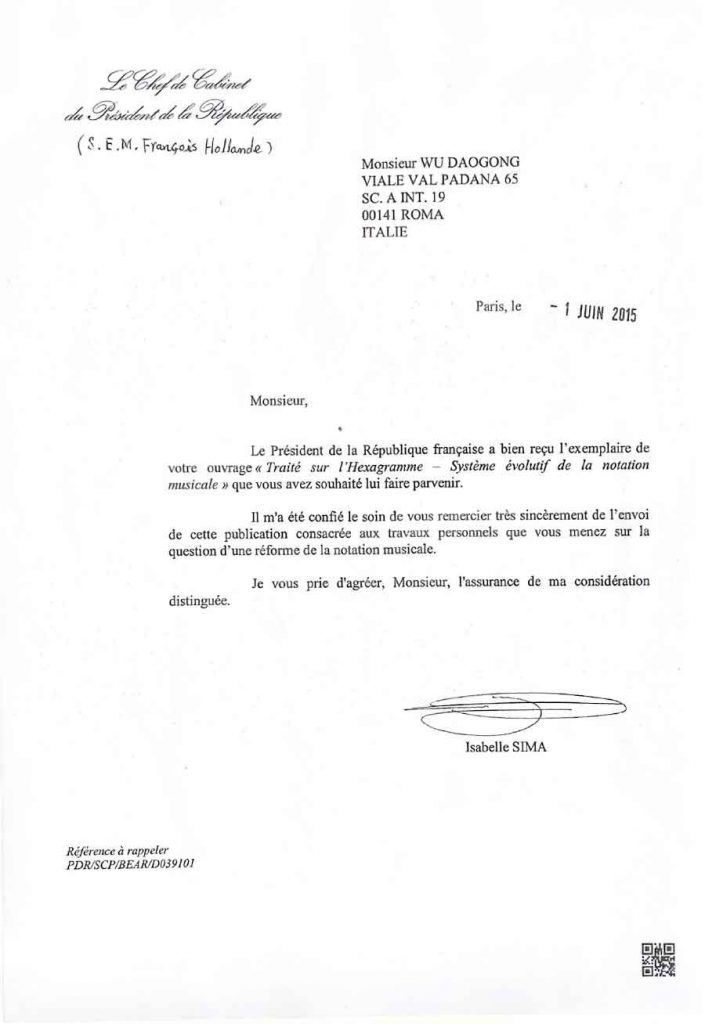
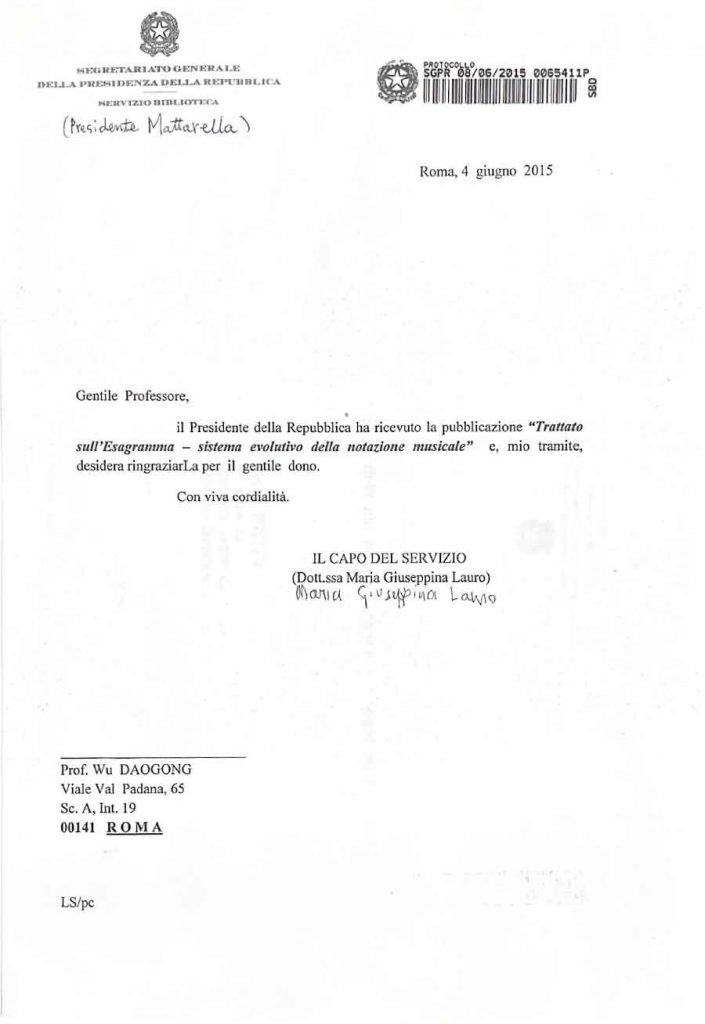
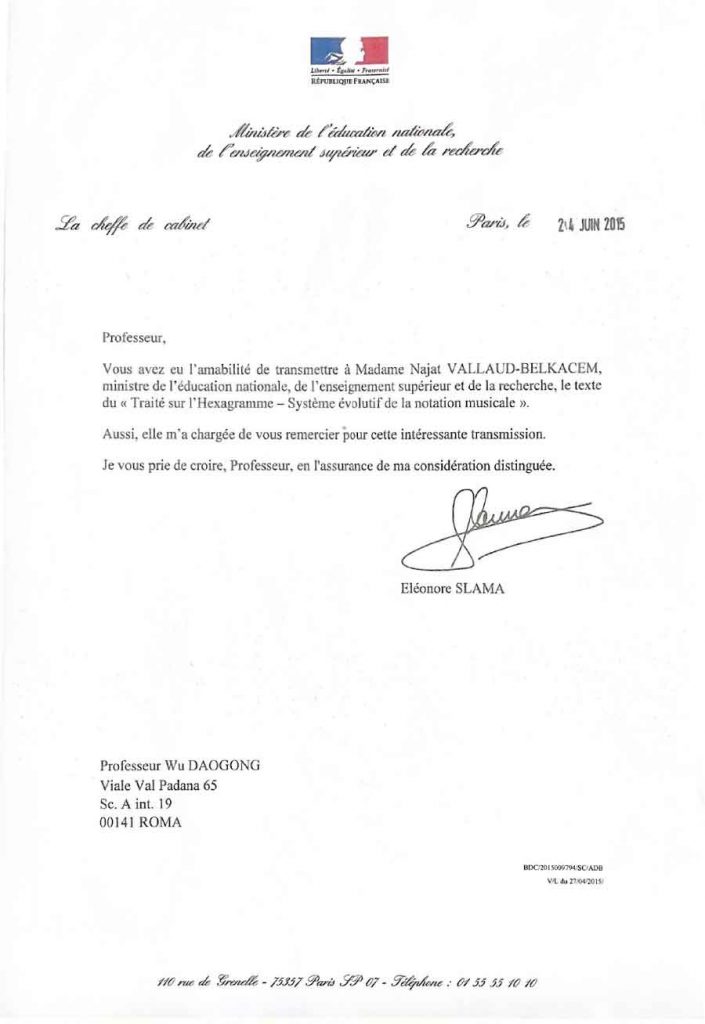
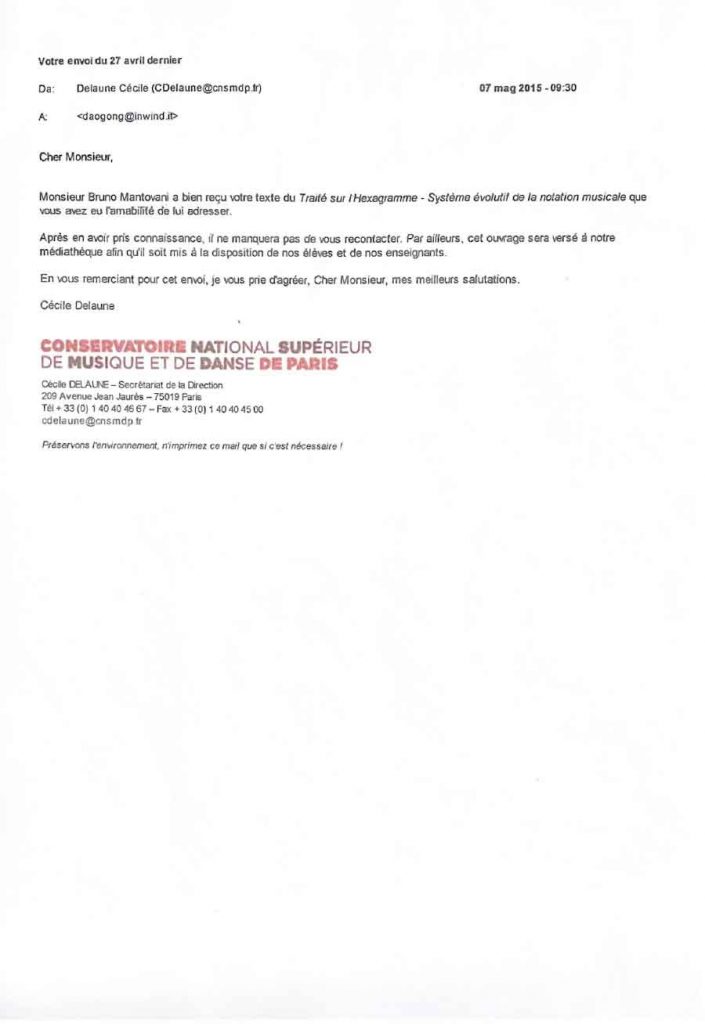
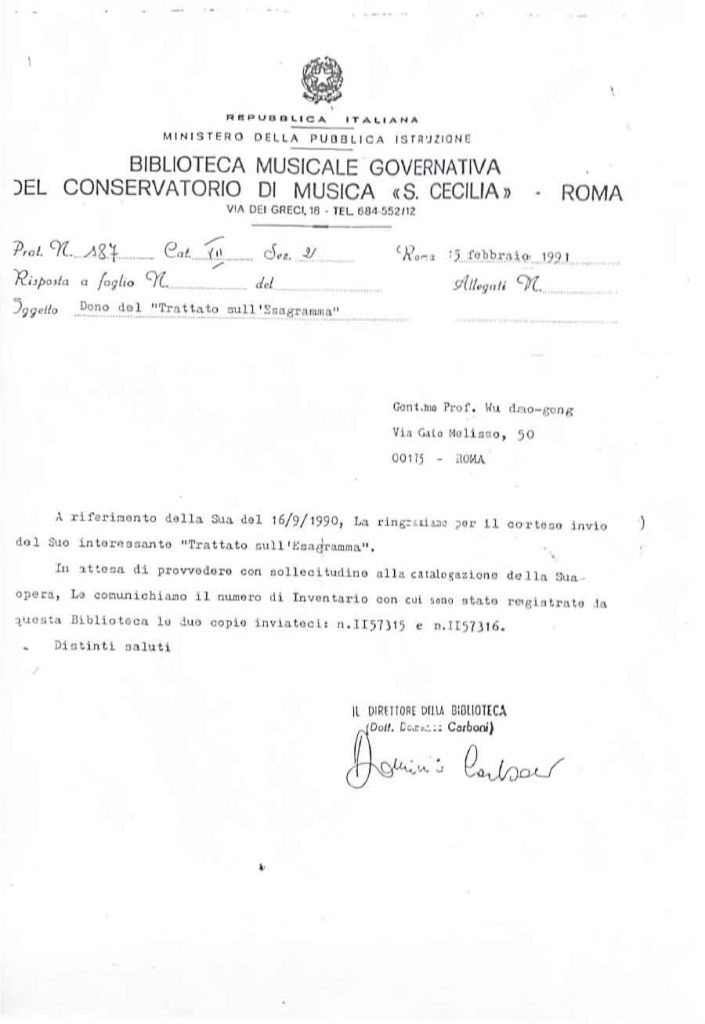
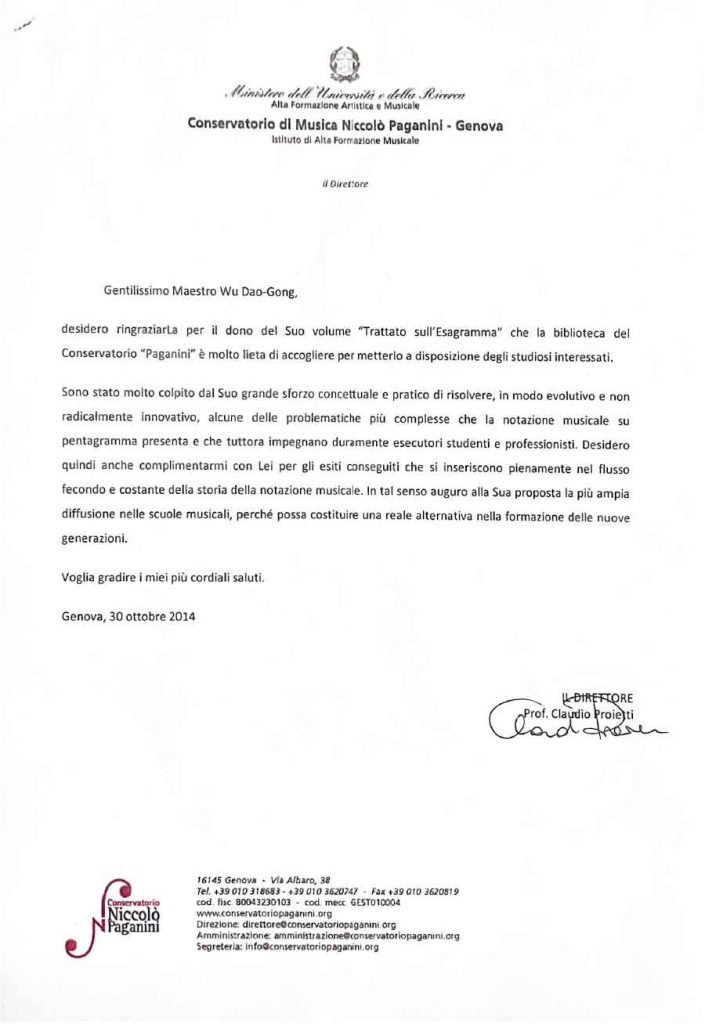
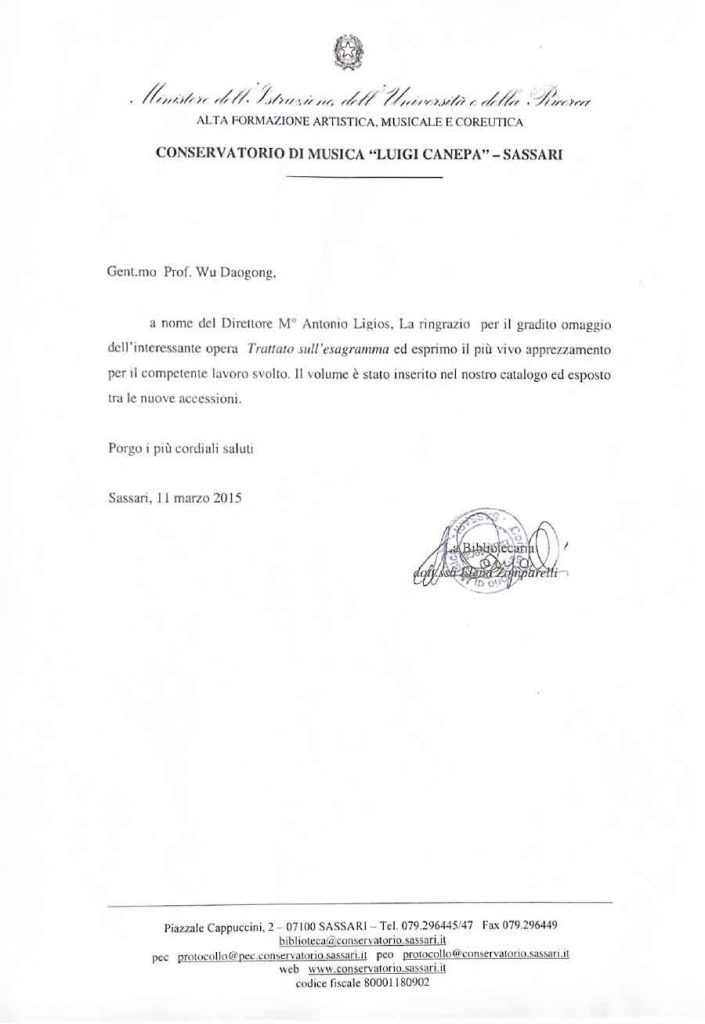
The Important References part: affirmative appraisals and cataloging in manuals of the musical Hexagram theory
INDEX
PRESENTATION, by Franco Mannino
PREFACE, by Zhao Feng
AUTHOR’S PREFACE
INTRODUCTION
THE FORMAL STRUCTURE AND THEORETICAL FOUNDATIONS OF HEXAGRAM NOTATION
THE HEXAGRAM NOTATION STAFF SYSTEM AND RULES FOR ITS APPLICATION
A. The “Great staff” of 13 lines of the Hexagram
B. The “Complete staff” of the Hexagram
C. The relationship between the “Great staff” and the “Complete staff” of the Hexagram
D. The “Middle staff” (“Alto staff” and “Tenor staff”) of the Hexagram
E. The “Transitional staff” of the Hexagram
F. The “Inferential staff” of the Hexagram
G. The “Demonstrative staff” of the Hexagram
H. The notation of the 24-tone equal-temperament system
I. The new order of Hexagram notation and rules applied in the full score
J. The Tonic Do/La solfeggio (relative solfeggio) notation and the applicative modality of the generalization on the Hexagram
THE FUNCTION AND MEANING OF HEXAGRAM NOTATION
CONCLUSION
APPENDIX (1)
Synopsis of the diagram of musical instruments and human voices, with the notation in the respective keys and with real sounds, referring to the frequencies on the Hexagram
APPENDIX (2)
System of the keys-signature in Hexagram notation
APPENDIX (3)
Unified “Complete staff” of 27 gradual lines
Example 1.
FOR PIANO
(With the unified “Complete staff” of 27 gradual lines of the Hexagram notations)
CONCERTO N°1 IN Bb minor Op.23, by Peter Tschaikovsky
Example 2.
FOR PIANO
(With the “Great staff” of 13 lines of the Hexagram notation)
PAGE FROM ALBUM: “For Elise”, by Ludwig van Beethoven
Example 3.
FOR VOICE WITH PIANO ACCOMPANIMENT
(The part of voice with the Tonic Do/La solfeggio notation on the Hexagram)
‘O Sole Mio (Neapolitan song)
Example 4.
FOR CHORUS
(With the Tonic Do/La solfeggio notation on the Hexagram)
Frère Jacques (Brother John / Bruder Jakob / Fader Jakob…)
RESEARCH MATERIALS AND SOME CONSIDERATIONS
General observations on proposals of music notation reform
How to evaluate the need for Pentagram notation reform
How to evaluate the possibilities of Pentagram notation reform
Reference 1.
THE MUSIC NOTATION REFORM PLAN IN THE “TREATISE ON THE HEXAGRAM” ACADEMIC STRUCTURAL ELEMENTS AND THEORETICAL APPLICATIVE CONNOTATIONS
Reference 2.
PRESENTATION OF THE FIRST ITALIAN EDITION
by Editrice Europea, Rome 1990
Reference 3.
SOME INFORMATION AND SITUATIONS WORTHY OF ATTENTION
RECAPITULATIONS AND CONSIDERATIONS, by Wu Dao Gong
ENTERTAINMENT.
To get optimised print use PDF files in download page